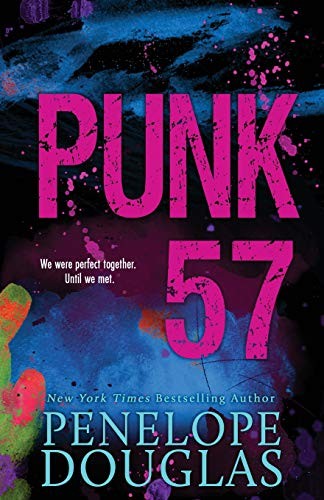
A relationship built entirely on words — no faces, no context, no social performance layered over everything — carries a specific intimacy that face-to-face connection rarely achieves. When there is no body to perform for, no audience to manage, the honest self tends to surface. Two people who will never meet have nothing to protect and everything to say. And then the gut-drop of realizing that person exists in the physical world, standing somewhere near you, and you have had no idea who they are.
Misha and Ryen have been each other’s emotional truth-tellers since fifth grade. They know each other’s fears, embarrassments, secret opinions, and real selves — all of it conveyed in letters, none of it attached to a face. When they collide in person without recognition, Penelope Douglas engineers one of the more quietly devastating dramatic irony setups in the genre. He knows her. She does not know him. And what he sees in person is not entirely what she became in the letters — which is its own kind of complication. The gap between the person she is on paper and the person she performs in public is exactly the tension the book lives inside.
This book works because it asks a question worth sitting with: do you fall in love with a person or a version of a person? The pen pal relationship strips away every social performance and leaves only what is essential. Then the real world adds all the performances back. The tension lives between those two truths — the person she is in letters and the person she has become in front of an audience — and the question of whether the essential self and the performed self can be reconciled, or whether the person he fell for still exists anywhere.
Douglas’s writing in this book has a rawness to it that is characteristic of her best work. She does not resolve the tension between Misha’s knowledge and Ryen’s performance cleanly or quickly — she lets it build, lets the dramatic irony press on the reader, lets the distance between who these two people genuinely are and who they are presenting themselves to be become genuinely uncomfortable before it becomes something else. That discomfort is intentional, and it is one of the things that distinguishes this book from lighter entries in the pen pal romance subgenre.
The dual-perspective narration in audio is particularly effective here. You are inside both of their heads as the dramatic irony builds — every near-miss between recognition and revelation becomes electric when you can hear exactly what each of them is thinking and choosing not to say.
Douglas’s other titles sit in the same new adult space and reward exploration for readers who responded to her emotional honesty here. Falling Away explores similar themes of identity and self-construction from a different angle. Outside her catalog, November 9 by Colleen Hoover builds a love story around a secret that changes the meaning of the whole relationship — a different mechanism but the same emotional engine, asking what it means to be known and whether that knowledge can survive what it discovers. Credence by Penelope Douglas herself goes considerably darker and is not for every reader, but for those who want to understand her range, it is an essential title.
What would it mean to be known completely, before you were ever seen? And what happens when the seeing changes the knowing — when the physical person complicates the essential one, or reveals that the essential one has been buried under performance for so long that even the person themselves has lost track of where it is? That is the question Punk 57 lives inside, and it does not let go easily.
A practical note: this book exists in a morally complex space that Douglas inhabits deliberately. Some of the choices characters make here — particularly Misha’s — are not meant to be endorsed, and Douglas does not present them as such. The emotional truth of the book operates on a different register than a moral endorsement of its events. Readers who approach it that way tend to find it one of the more emotionally precise books in the new adult space. Those who prefer their romantic leads unambiguously heroic may want to adjust their expectations accordingly.