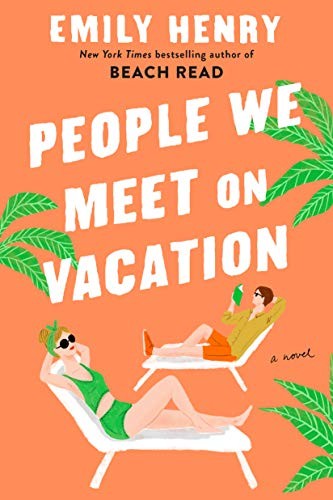
Best friends who vacation together every summer — just the two of them, a different city each year, a ritual that becomes the thing they both organize their lives around — are doing something that looks like friendship and is quietly something else entirely. Emily Henry understood exactly what that something else is, and built People We Meet on Vacation around the specific ache of realizing it too late and then having to decide whether too late is actually final.
Alex and Poppy have been best friends since college. Every summer, one trip. Ten years of it. And then one summer something shifted between them — something neither of them named, something that broke the pattern and left two years of silence in its wake. The novel moves between the summers that built them and the present-day attempt to repair what the silence cost. Henry’s structure is doing precise emotional work: every flashback adds to the reader’s understanding of what was being built and what it took to destroy it, which means the present-day reconciliation arrives weighted with everything that came before.
What Henry does in this book that she does slightly differently from her others: the obstacle is not external circumstance but internal failure. Alex and Poppy did not miss each other because the world got in the way. They missed each other because they both made choices that prioritized safety over honesty, and those choices compounded. Henry does not let either of them off the hook for that, and the reconciliation is more emotionally complex as a result. This is a book about two people who have to reckon with their own cowardice before they can have what they both wanted, and that reckoning is specific and uncomfortable and entirely worth it.
The travel element is more than setting. Each city becomes a container for a version of their relationship — where it was, what it was becoming, what it failed to be. Henry’s attention to the specific texture of each location gives the flashback structure a sensory grounding that keeps the timeline from feeling abstract. You remember the summers not just as plot points but as places, which is how memory actually works.
Henry’s prose has the rhythm that her readers have come to expect — sharp and warm simultaneously, the kind of dialogue that sounds effortless and is clearly very considered. People We Meet on Vacation sits alongside Beach Read as her most emotionally complete work — different in structure and emotional register, but equally precise about the specific difficulty of admitting what you want to someone who already knows you too well to accept a performance of indifference.
For readers who want to stay in the best-friends-to-lovers space, The Hating Game by Sally Thorne offers a version of the same dynamic compressed into a workplace and run at higher temperature — less ache, more combustion, equally effective. For the second-chance element specifically, Vows by LaVyrle Spencer handles the reunion of people with real history at a slower, quieter pace that will satisfy readers who want the ache extended rather than resolved quickly.
They had ten summers. Then they had two years of nothing. Then they had one more chance to decide whether the friendship that contained everything they felt for each other was worth the risk of naming what it actually was. People We Meet on Vacation is a book about what it costs to want something quietly for too long — and what it takes, finally, to stop being quiet about it.
Henry’s back catalog rewards staying in her world — Happy Place explores a long-established relationship at the point of fracture, asking what happens when two people who love each other have stopped telling each other the truth. Funny Story takes the enemies-adjacent setup of two people thrown together by circumstances neither of them wanted and runs it with more comedy and more warmth than most books in that space manage simultaneously. All of them share the quality that makes Henry one of the most widely read romance authors working right now: the emotional difficulty is the point, not the obstacle, and she never flinches from it.
One practical note on reading order: People We Meet on Vacation is a complete standalone — no prior Henry required. Readers who come to it first often work backward through her catalog afterward, which is the best possible argument for entering her world wherever you land.