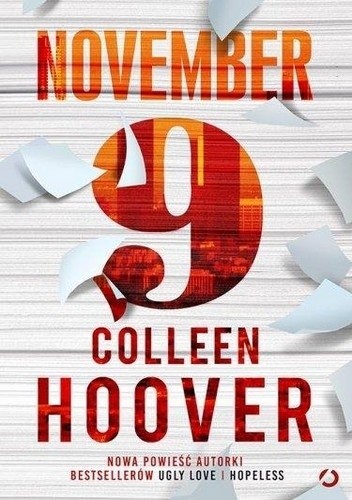
Meeting someone on November 9th and agreeing — right then, on the first day — to see each other once a year on that date and never in between is either the most romantic thing you have ever heard or a structural guarantee of disaster. Colleen Hoover built November 9 on that premise and on the reader’s growing certainty that one of these two people is carrying something that will change the meaning of everything. She is right. She times the revelation with the precision of someone who knows exactly how much the reader can hold before they need to know the truth.
Fallon is moving across the country the day she meets Ben. He is a writer. She is trying to figure out who she is after a accident changed her face and everything that followed from it. Their chemistry is immediate and the constraint they place on it — one day a year, nothing in between — is both a narrative device and an emotionally honest portrait of two people who find each other too soon and try to engineer a version of meeting at the right time. That engineering is what will undo them, because it depends on Ben’s honesty, and Ben has a secret.
Hoover’s particular skill is making the reader feel the weight of information asymmetry — you are aware, before Fallon is, that something is wrong, and the specific quality of that awareness changes how you experience every scene between them. The annual meetings are not just romantic setpieces. They are also evidence accumulating toward a verdict the reader is reaching ahead of schedule. When the secret breaks, it reframes everything. Hoover is precise about what she wants the reframing to cost, and she does not let the resolution come cheap.
November 9 works because Fallon’s arc is genuinely independent of Ben’s secret. She is doing real work on her own story — rebuilding an identity, confronting her family’s dynamics, deciding who she is now — and that work continues whether or not Ben turns out to be honest. The romance is the thread that runs through the year, but Fallon’s life is what gives the thread something to pull against. Hoover understood that a heroine who is only defined by her relationship to the hero is a heroine who cannot carry the weight of this particular reveal, and she built Fallon accordingly.
This book sits in interesting company within Hoover’s catalog. It Ends With Us asks harder questions and goes to more difficult places. November 9 is somewhat lighter in its emotional register — more propulsive, more willing to let the reader enjoy the romance before the other shoe falls — but it shares the quality that makes Hoover’s best work last: the emotional truth is structural, not decorative. The secret is not a twist for its own sake. It is the thing the book is actually about, revealed when it can do the most work.
For readers who want the annual-meeting structure with a different emotional temperature, One Day by David Nicholls covers a year-apart dynamic across a full lifetime with considerably more literary weight and considerably more pain. For the secret-that-rewrites-everything mechanic in a contemporary romance key, Punk 57 by Penelope Douglas builds a similar information asymmetry through letters and identity rather than annual meetings, and delivers the revelation with the same quality of retroactive reframing.
One November 9th was always going to be the one that ended the arrangement. The question Hoover keeps the reader asking — sometimes in dread, sometimes in hope — is whether ending it means losing it entirely or finally being honest enough to keep it. The answer arrives exactly when it should, and it lands with the full weight of everything the book built toward it.
Hoover’s back catalog is worth exploring for readers who want to stay in her emotional register. All Your Perfects examines a marriage from the inside, at the point where love and incompatibility have become impossible to untangle — quieter and more domestic than November 9, but equally unflinching. Ugly Love takes the no-strings arrangement to its logical emotional conclusion with efficiency and heat. All of them share Hoover’s signature: she will not let you off the hook for the comfortable reading, and the books you cannot stop thinking about tend to be the ones that refused to be easy.