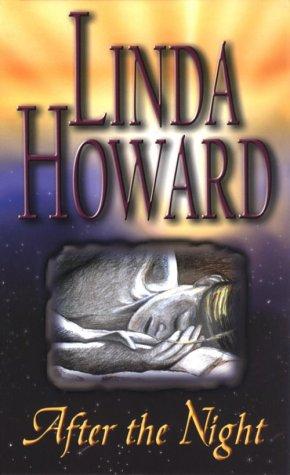
Coming back to a place that hurt you requires a particular kind of stubbornness — or a particular kind of unfinished business. Faith Devlin left Prescott, Louisiana at fourteen when her family was run out of town in the middle of the night, and she built herself into someone entirely different in the years that followed. Gray Rouillard was the one who had her family removed. He was seventeen, he did not fully understand what he was doing, and he has spent the intervening years not thinking about it as much as he claims. Linda Howard built After the Night on the collision of two people with a shared history that only one of them has been honest about, in a town where everyone knows everything and nobody says it out loud.
This is Southern Gothic romance at its most committed — the Spanish moss and the humidity are not atmosphere, they are pressure. Faith comes back because she needs to find out what happened the night her family left, and what it has to do with the Rouillard family patriarch who disappeared around the same time. Gray needs her gone before she finds out what she is looking for. What neither of them planned for is that fifteen years of separate lives have produced two people who are genuinely drawn to each other, regardless of everything between them. Howard does not soften that complication. She runs it at full temperature and lets it burn.
Howard’s gift is moral complexity rendered without editorializing. Gray did something that damaged Faith’s life when they were both too young to understand what they were doing, and he has benefited from the status quo ever since. He is not a villain — he is a man with a specific history, specific loyalties, and a specific blind spot that is very conveniently located. The romance works because Howard makes the reader understand all of it, and because Faith’s strength is specific enough to carry the weight of what understanding him requires. She is not forgiving what does not deserve forgiveness. She is deciding what she actually wants with full information, which is a different and more interesting thing.
The mystery element in this book is genuinely involving — Howard is one of the few romance writers who integrates the suspense plot and the romantic plot so completely that they are impossible to separate. The secret that drove everything is also the final obstacle to the romance, and its resolution is both a plot payoff and an emotional one. Neither half feels like a distraction from the other.
Howard’s Golden Era romantic suspense catalog is deep and consistently excellent. Dream Man applies a similar moral complexity to a detective and a witness in a different Southern setting. Kill and Tell goes harder into the suspense element while maintaining the quality of romantic tension. For readers who love the Southern setting and the weight of old secrets but want something slightly warmer in its emotional register, Hawk O’Toole’s Hostage by Sandra Brown is the natural companion — different premise, same understanding of how external danger accelerates the internal reckoning.
She came back for answers, not for him. He wanted her gone, not because he did not want her but because he could not want her without reckoning with everything that meant. After the Night is the story of what happens when two people with every reason to stay apart cannot manage to, and what the truth costs when it finally arrives. Howard tells it without flinching, which is the only way a story like this can be told honestly.
A note on Linda Howard’s place in the genre: she was one of the defining voices in Golden Era romantic suspense and one of the writers who proved the category could carry genuine moral weight without sacrificing the romance. Her back catalog is large and rewards extensive reading — nearly every title offers the same combination of propulsive plotting and emotionally specific characterization that makes After the Night one of her most enduring books. Start here, and the catalog will follow.
For readers encountering Howard for the first time: her books operate at a heat level and an emotional intensity that can feel more compressed than contemporary romance. She does not linger; she trusts the reader to keep up. That compression is a feature — the tension is denser for it, and the payoffs arrive with more force because they have not been diluted by extended processing. Give her a chapter to calibrate to, and the pace will start to feel like the story’s natural metabolism rather than haste.