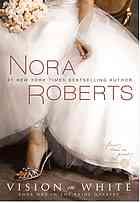
A specific defense mechanism develops in women who have seen enough of love’s wreckage to decide the safest position is behind the camera. To witness other people’s happiest days with professional warmth and genuine skill, and to keep your own life small and controlled and entirely your own. To be good at your work and fine at everything else, and to have arranged things so that fine is sufficient. Nora Roberts understood that armor completely when she wrote Mac Elliot, and she knew exactly what it would take to get past it.
Mac photographs weddings for a living. She is competent, funny, and genuinely gifted — and she has deployed professional warmth as armor for so long that she has almost stopped noticing the armor is there. Carter Maguire is an English teacher who has been quietly in love with her for years and has, in the meantime, done the work of figuring out who he is. He is clear about what he wants. He does not demand she want it back on his timeline. He simply makes himself consistently present and entirely undeterred, which turns out to be a more effective strategy than pressure would have been.
The Bride Quartet series works as well as it does because Roberts takes women’s friendships as seriously as she takes the romance. Mac’s business partners and best friends — Emma, Laurel, and Parker — are fully realized people with their own histories and their own stories unfolding alongside hers. That community is part of what makes this world feel worth inhabiting. The romance is better for existing inside a life rather than instead of one. Mac has reasons for her walls — real reasons, born from a specific mother and a specific history — and the book respects that without letting the walls be permanent.
Roberts’s Carter Maguire deserves separate mention. He is not the standard-issue romance hero — not dominant, not particularly alpha, not putting in grand gestures or calculated pursuit. He is a man who is entirely at peace with himself, which turns out to be its own kind of magnetism. Mac has spent her adult life around people who are performing something, and Carter is simply not performing. The contrast is what gets through her armor when nothing else would. Roberts understood that the right hero for this heroine was not the one who could break down her walls but the one who made them feel unnecessary.
Roberts’s warm, grounded prose translates beautifully to audio — the ensemble feeling of the series, with its overlapping relationships and shared history, comes alive when you hear the voices inhabiting the world together. It is the kind of series that rewards long listening sessions, and the four books work best experienced close together so the community texture stays fresh.
The Bride Quartet follows each of Mac’s three business partners in turn — Emma (flowers), Laurel (cake), and Parker (coordination) — and the friendships deepen with every book. Reading the full series is the right choice if this world takes hold of you. Outside this series, Roberts’s In the Garden trilogy offers a similar ensemble warmth with a slightly different emotional register. For readers who want the professional women’s friendship dynamic in a more contemporary romance setting, The Flatshare by Beth O’Leary builds community with similar warmth and similarly realized secondary characters.
For women who have made a life of being fine — competently, cheerfully, professionally fine — this book is about what happens when someone sees through the fine and decides to stay anyway. Not to fix it. Not to dismantle the armor by force. Just to be there, consistently, until fine stops being enough. That is not a small thing. That is, in fact, the whole story.
Roberts is one of the most prolific writers in romance, and the consistency of her craft across an enormous catalog is remarkable. The Bride Quartet sits in her contemporary work, which is distinct from her J.D. Robb futuristic crime series (written under a pen name) and her trilogies and standalones. New readers sometimes find the volume of her output daunting. A useful entry point: if the warmth of community and friendship matters to you as much as the romance itself, her quartet and trilogy format contemporary work — where a group of women’s individual stories unfold across connected books — tends to deliver that best. The Bride Quartet is one of the finest examples.