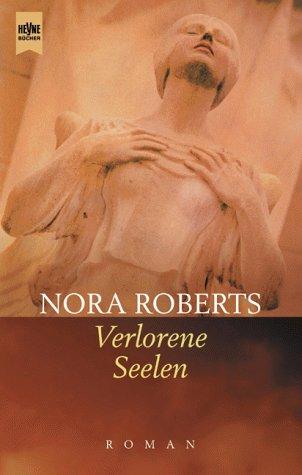
Trusting someone with your safety creates an intimacy that arrives uninvited — a specific, involuntary closeness that develops not through choice but through circumstance. And then the slower, more deliberate intimacy of realizing that you have, somewhere in the course of being protected, trusted them with something else entirely. That you have let them in not just through the door they were assigned but through ones you thought you had locked. That the professional arrangement has become something that has no professional category. Nora Roberts built Sacred Sins on exactly that realization, and she understood its emotional mechanics from the first page.
Tess and Ben are brought together by a case that keeps pulling them toward each other even as professional protocol says otherwise. She is a psychiatrist; he is the detective assigned to protect her. The external danger is real and the case is genuinely involving — Roberts, even in her early work, understood that romantic suspense functions best when the thriller elements are woven into the emotional architecture rather than laid over it. The danger outside mirrors the risk inside: letting someone close, in a situation where vulnerability is already heightened, is its own kind of exposure that the professional framing cannot contain indefinitely.
Roberts understood the protector dynamic better than most — the intimacy that grows in the spaces between danger, when two people are spending long hours in forced proximity under conditions that strip away the social performances people normally maintain. Tess sees Ben at his most focused and his most uncertain. He sees her at her most defended and her most genuinely afraid. That mutual witnessing, under pressure, builds the kind of knowing that normally takes years to accumulate. The danger accelerates everything, and Roberts uses that acceleration with precision rather than as a shortcut.
Tess herself is worth examining as a character. She is professionally equipped to understand exactly what is happening between her and Ben — she has the vocabulary, the analytical framework, the awareness of her own psychology. And none of it is sufficient to stop it from happening. Roberts uses Tess’s expertise as a form of dramatic irony: the woman who can explain the mechanism in clinical terms is as powerless to prevent the outcome as anyone else. That gap between understanding and feeling is one of the more honest things this book does.
The thriller pacing makes audio almost essential — the tension builds differently when you cannot flip ahead, and the emotional beats land with more force when you are locked into the forward motion of the story. The danger feels more present when it is narrated, and the dual threat — external and internal — has more simultaneous weight when you are hearing rather than reading.
Roberts’s broader romantic suspense catalog rewards following the thread. Her J.D. Robb series, written under a pen name, applies the same instinct for the intersection of danger and intimacy across more than fifty books set in a near-future New York. Her standalone romantic suspense titles — Tribute, Angels Fall, The Witness — carry the same craft at varying emotional temperatures. For readers specifically interested in the bodyguard or protector dynamic, the genre has explored it extensively, and Roberts’s early work stands as one of the better examples of why it works so consistently.
She survived the danger outside. The harder thing was surviving him — surviving the intimacy of being fully seen by someone under conditions that made the seeing unavoidable. Sacred Sins understands that from its earliest pages, and it builds toward that realization with the care it deserves.
A note on Roberts’s early romantic suspense specifically: these books were written in the 1980s, at a time when she was still establishing her voice and her command of dual-genre structure. They are not as polished as her later work, and readers who come to them after her more recent titles sometimes notice the difference. What they offer that the later work occasionally sacrifices in favor of production scale is a certain intimacy of focus — smaller casts, tighter plot engines, the full weight of the romantic relationship as the center of everything. For readers who want that particular quality of Roberts, the early romantic suspense titles are worth finding.