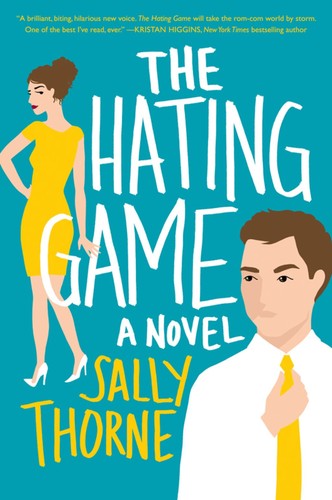
The tension of working across from someone who infuriates you is a very specific kind of misery. Every small victory over them feels outsized. Every defeat stings twice as hard as it should. You catalog their habits with the precision of someone who is definitely, absolutely not paying too much attention. And at some point, if you are being honest with yourself, you have to ask: why are you keeping score with someone you claim not to care about?
Lucy and Joshua are the gold standard of workplace enemies-to-lovers. Their banter is vicious and precise, and you find yourself rooting for both of them to lose simultaneously. The shared desk is a stroke of genius — there is literally nowhere to hide, no retreat, no recovery time. Just each other, all day, every day, until something gives. Sally Thorne builds a pressure cooker out of office furniture and two people who are far too aware of each other to be as indifferent as they claim.
Thorne understands that antagonism and attraction share the same nervous system. The energy you spend despising someone is the same energy that could be redirected into wanting them — and this book is about that exact pivot point. The moment when you stop pretending you have not noticed every single thing about them. The particular intimacy of being someone’s obsession, even a hostile one. Joshua knows Lucy’s tells. Lucy knows Joshua’s. That knowledge is more dangerous than either of them is willing to admit.
What Thorne does particularly well is Joshua himself. He is not simply grumpy or cold — there is a specificity to him, a history that explains both his guardedness and his precision. The more the reader understands Joshua, the more the hostility between them reads as something else entirely: a man who has learned not to want things, slowly learning to want this specific thing against every instinct he has developed. Watching him come undone is the quiet engine of the book, and Thorne times every revelation about him with care.
The banter is everything in this book, and on audio it absolutely snaps. The voice performances capture both the sharpness of the war and the heat underneath it. The shift, when it finally comes, hits differently when you hear it rather than read it — you feel the temperature change in real time. If you are new to workplace romance as a subgenre, this is the best possible entry point, because Thorne sets the bar for what the tension can accomplish when it is done right.
Readers who love this book often find themselves chasing the same combination: enemies who are too smart for their own feelings, proximity that removes every excuse, banter that is the relationship before either person is willing to call it that. The Kiss Quotient by Helen Hoang offers a different dynamic — quieter antagonism, more explicit vulnerability — but earns its tension through the same basic architecture of two people who cannot stop paying attention to each other. One Last Stop by Casey McQuiston builds workplace chemistry in a completely different setting and with more romantic comedy energy, but delivers the same satisfaction of watching two people stop pretending. For readers who want the enemies-to-lovers tension drawn out over a much longer slow burn, The Wall of Winnipeg and Me by Mariana Zapata is the standard-bearer of the genre.
One thing Thorne gets exactly right that many workplace romances miss: the resolution does not come from some external event forcing the issue. It comes from one of them deciding to stop pretending. That choice — made deliberately, with full knowledge of the risk — is what distinguishes this book from the genre standard. The ending earns its emotion because both characters have to actively choose it, and you have watched them spend the entire book finding reasons not to.
The relief of finally admitting you want the person you have been fighting. Of realizing that the one who knows you best — every tell, every weakness, every line of defense — has been standing right across from you this whole time. That is the game they were always playing. The Hating Game just lets you watch them figure it out.