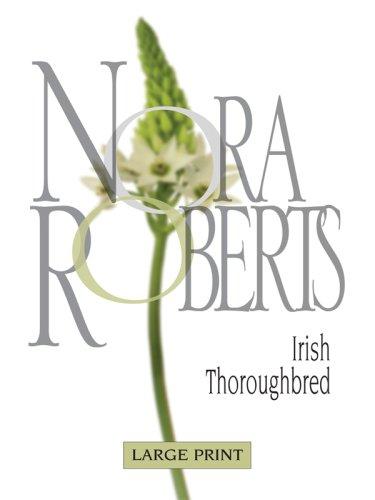
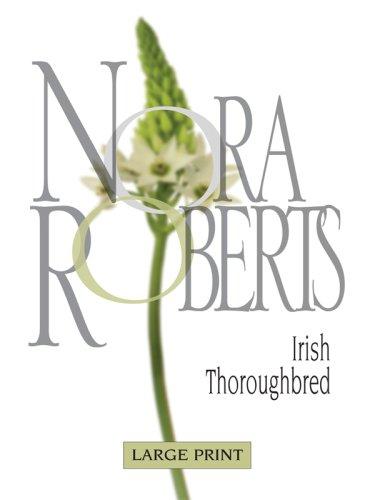
A quiet, particular devastation lives in loving someone who looks right through you. Who has known you long enough to see you, and chooses instead to look at you as furniture — present, familiar, not worth examining too closely. And the slow accumulation of that invisibility until you make a decision: enough. And the specific, terrible irony of the moment you stop waiting being the exact moment he finally looks. Nora Roberts built her debut novel on that irony, and she got it exactly right.
Adelia and Travis have history — the easy, unexamined history of people who grew up in each other’s orbits on a horse farm, where the work creates a kind of intimacy that does not have to be named. She has loved him for years. He has been oblivious in that particular way of men who have filed someone in a category they have not thought to revisit. Roberts understood the mechanism already in this first novel: the heroine’s resignation is not background detail. It is load-bearing. The reader has to fully feel the weight of her letting go before the hero’s awakening means anything at all.
Roberts even in her earliest work understood something that separates a good romance from a great one: the hero’s awakening only lands with full force if you have first felt the heroine’s defeat. Travis finally seeing Adelia only matters because you have watched her stop expecting him to. That sequencing — despair before hope, resignation before recognition — is one of Roberts’s enduring strengths, and it is already present here in the work that launched her career. She arrived knowing what she was doing, which is part of why she became who she became.
The Irish setting does real work in this novel. The horse farm is not simply backdrop — it is a world with its own rhythms and its own demands, and Adelia’s connection to it gives her an interior life that exists independently of her feelings for Travis. She is not defined by the waiting. She is a full person who has been waiting on the side while living a life, and that specificity is what makes her worth watching when the dynamic finally shifts.
The warmth of the Irish setting and the simplicity of the emotional core both translate well to audio — a good narrator can capture the lilt of Adelia’s voice and the particular quality of the rural Irish atmosphere that Roberts established in her debut and returned to throughout her career. This is a short book by current standards, and audio makes it feel perfectly sized.
Roberts built an enormous career from this starting point, and readers who connect with this emotional register will find their way through significant stretches of her catalog. The Irish Hearts duology — this book and its companion Sullivan’s Woman — offers a natural next step. Beyond that, Roberts’s contemporary trilogies (the Chesapeake Bay series, the Quinn Brothers, the MacGregors) offer the same warmth and emotional honesty at greater length and with more complex casts. All of them trace back to the sensibility she established here: the plain, specific truth of people who finally say the thing they should have said much earlier.
She almost walked away. She had every reason to walk away. That is what makes it matter when he finally sees her — not the looking itself, but the fact of what it almost cost him, and how close he came to never knowing. Irish Thoroughbred is where that story begins, for Nora Roberts and for every reader who recognizes the particular ache of loving someone who hasn’t thought to look.
One more note on Roberts as a debut novelist: Irish Thoroughbred was written when she was a young mother snowed in with nothing else to do, submitted on a whim to a Harlequin contest, and eventually published in 1981. It is not a polished work by the standards of her later writing — the craft that would make her one of the best-selling authors of all time is here in embryonic form, not fully realized. What is already fully realized is the emotional intelligence. The understanding of what makes a love story land, the sense of timing, the care for both characters’ interiority. Those things were never learned. They were simply present from the beginning.