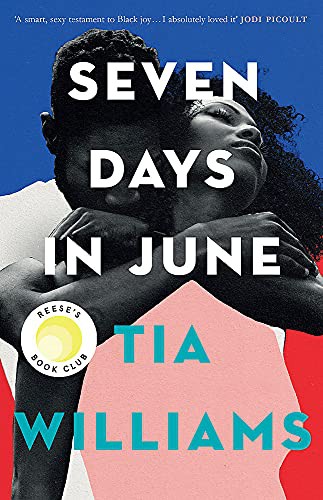
Some second chance romances are about two people who drifted apart. Some are about two people who were separated by circumstances. Seven Days in June by Tia Williams is about two people who had five days at seventeen that were so total and so shattering that both of them have been living inside the aftermath for fifteen years without admitting it to themselves. That is a more interesting premise, and Williams executes it with the kind of literary intelligence that makes the book feel like it exists in a category adjacent to romance rather than inside it — until the romance lands, and you understand that it is entirely the point.
Eva Mercy is a romance novelist who has built a career writing about a fictional couple — Nena and Baz — whose love story has become a series phenomenon. What readers don’t know, and what Eva barely admits to herself, is that Nena and Baz are thinly veiled versions of her and Shane Hall, the acclaimed literary novelist who just showed up at the party where she is supposed to be celebrating her latest publication. They haven’t seen each other in fifteen years. The five days they had when they were seventeen were never explained, never completed, and have never been far from either of their minds.
Williams writes with a lyricism that is unusual in contemporary romance and entirely earned. She is a stylist in the truest sense — the prose has a quality that makes rereading worth the effort, not because you missed plot points but because the sentences themselves contain more than they appear to. The New York literary world she inhabits is specific and textured, the Black experience she writes from is central and never incidental, and the chronic pain subplot involving Eva adds a layer of emotional complexity that makes her feel like a complete person rather than a romance heroine performing vulnerability.
The dual narrative between Eva and Shane is constructed with precision — their separate perspectives on the same history don’t line up neatly, which is the point. Memory is not objective, and the story each of them has been telling themselves about those five days has been shaped by what each needed it to mean. The book’s great achievement is revealing both versions simultaneously and letting the reader hold the space between them.
The audiobook is frequently cited as one of the best listening experiences in contemporary romance — Williams’s prose rhythm translates beautifully to narration, and the dual perspectives feel genuinely distinct in a way that deepens the emotional architecture of the book. For readers who found Me Before You emotionally total in a way that other contemporaries rarely match, Williams is working at a similar level of emotional commitment, in a very different register.
This book found an enormous audience on its release and has sustained it, which is the mark of a story that does something real rather than something trendy. It shows up on “best romance novel” lists maintained by readers who don’t generally seek out the genre, which is its own kind of recommendation. It is a book about two writers whose love story became literature before they understood what was happening — which makes the resolution, when it arrives, feel like the end of a very long sentence finally finding its period.
What Williams understands is that the love story and the work are not separate. Eva’s novels about Nena and Baz are not escapism from her real feelings — they are her real feelings, processed through the only medium she trusts. When she and Shane finally reckon with those five days honestly, it is not just a romantic reunion. It is two people finally agreeing to read what they each wrote and admit it was always about the same thing.