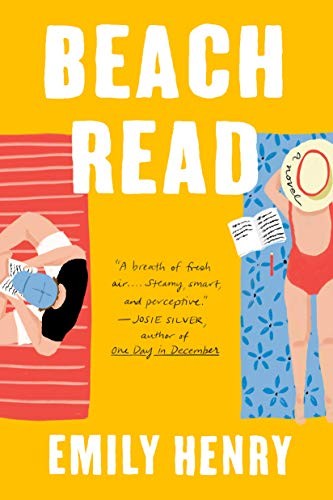
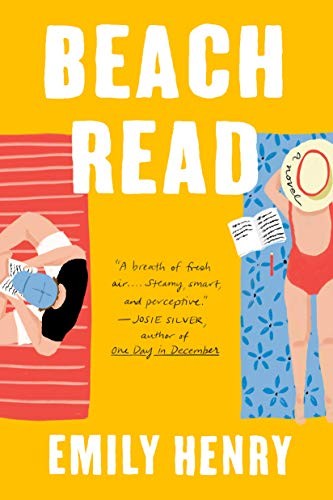
Going back to someone in summer is a specific kind of danger. Muscle memory overrides every rational decision you made in the time you spent apart. The warmth, the open water, the longer evenings — summer has always meant something, and being back in someone’s orbit during it means falling back the way summer always promised you could. Easy and inevitable, right up until it isn’t. Beach Read by Emily Henry understands exactly what it is doing with that premise, and it is not as simple as it looks.
January and Gus have real history and real hurt between them. They are not starting over — they are picking up pieces and finding, tentatively, that those pieces might still fit. Emily Henry places them in neighboring beach houses for a summer, creating a bubble where the real world cannot quite reach. They dare each other to write outside their comfort zones: she writes the dark literary novel, he writes the romance. Neither of them plans on writing their way back to each other. Henry builds their second chance as a genuinely difficult thing — something that requires work and vulnerability and the real possibility of being hurt again.
What sets Henry apart in this space is that she writes second chances as choices made with full knowledge of the cost. January is not naive about what happened between them. Gus is not pretending the gap years did not exist. Their reconnection is honest in a way that most second-chance romances are not willing to be — there is no convenient amnesia, no misunderstanding that a single conversation could clear up. The pain is real and so is the effort required to move through it. Readers return to this one because it feels like permission: to go back for someone, if you go back clear-eyed.
The genre-swap dare at the center of the book is smarter than it first appears. It is not just a plot device — it forces each of them to try on the other’s way of seeing the world. Gus, who writes about dark truths, has to learn to write toward hope. January, who writes toward happy endings, has to sit with the discomfort of not resolving everything neatly. The books they write that summer are a conversation they cannot quite have any other way. It is one of Henry’s most elegant structural choices.
Henry’s prose has a rhythm that feels like it was always intended for audio. The banter between January and Gus lands with particular precision when you hear it spoken — the wit and the wound underneath it both come through in a way that is hard to achieve on the page alone. The beach setting breathes differently in audio too: you feel the salt air and the particular suspension of a summer that everyone knows will eventually end.
Henry’s back catalog rewards staying in her world. People We Meet on Vacation takes a similar emotional architecture — real history, real hurt, a summer that forces a reckoning — and runs it through a years-long friendship that has become something more complicated. Happy Place extends that same emotional honesty into a longer, more established relationship at the point of fracture, asking what it means to love someone you may have already lost. Both books share with Beach Read the quality of treating the emotional difficulty of love as the actual subject, not the backdrop.
It is also worth noting what Henry does not do: she does not use the second chance as an excuse to erase the past. January and Gus carry their history into every scene. The people they became in the time they spent apart are present too — they are not falling back into who they used to be, they are deciding whether who they are now can build something new. That distinction is what makes the resolution feel true rather than convenient.
Sometimes the person you let go is the person you were always going to find again. Not because the universe arranged it, but because something in you kept the door open even when you thought you had closed it. Beach Read is about that door, and about the summer someone finally walked back through it — and about what it takes to let them.