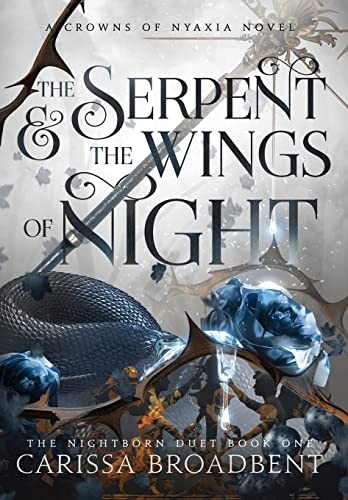
Some books are patient in the way that only the most confident writers can be — they know exactly what they are doing to you, and they let you feel every inch of it. The Serpent and the Wings of Night by Carissa Broadbent is that kind of book. It builds slowly, deliberately, and then it takes everything.
The premise sounds deceptively simple: a human girl in a world of vampires, raised by a vampire king, entering a deadly tournament called the Kejari to earn the one prize that matters — survival. What Broadbent actually builds is far more complicated. Oraya has spent her entire life learning that trust is a luxury she cannot afford. Every instinct she has was sharpened against the reality that she is the weakest creature in her world, and that weakness will get her killed. And then there is Raihn — her competitor, her potential ally, the worst possible person for her to feel anything about — who seems to understand exactly how armor like hers is built and exactly how to find the cracks in it.
What makes this book exceptional is that the enemies-to-lovers arc isn’t decorative. It grows from the specific situation these two characters are in. They need each other to survive rounds designed to kill them both. The trust they build is hard-won and logically sound, which makes it devastating. Broadbent doesn’t give you a montage — she gives you the exact moments that change things, the specific exchanges that mean too much, the silences that say more than the dialogue. Readers who found themselves wrecked by the slow, agonizing progression in From Blood and Ash will recognize the same structural patience here, but Broadbent’s world has a different texture entirely — darker, more atmospheric, more operatically violent.
The tournament setting is worth dwelling on. The Kejari is a construct of brilliant cruelty — competitors are pitted against monsters and each other in rounds that function as part political theater and part genuine spectacle of violence. It creates a world where the stakes are always visible and the intimacy developing between the two leads is constantly in tension with everything trying to destroy them. It is one of the strongest uses of a tournament structure in recent romantasy, and it never loses sight of the romance even at its most brutal.
This one is particularly immersive on audio — the pacing of the tension sequences translates almost cinematically, and the audiobook treats the atmosphere like a character in its own right. If you haven’t encountered Broadbent’s writing before, audio is a strong entry point into her world.
Fans of A Court of Thorns and Roses will find the bones familiar — deadly world, impossible attraction, a heroine more capable than anyone gives her credit for — but the emotional register is different. Where Maas goes sweeping and operatic, Broadbent goes precise and close. Readers who loved the political intrigue woven through Fourth Wing will find that Broadbent gives the same kind of world-building weight to her vampiric court structure, with an emotional core that cuts differently.
What Broadbent understands about readers of this subgenre is that romantic tension and survival tension aren’t separate pleasures — they feed each other. Every moment the characters are in danger is also a moment they might not get to feel what they’re feeling. That urgency is structural, baked into the tournament’s design. At its heart, this is a story about a girl who has learned not to want things learning to want something anyway, knowing full well what it might cost her. That is not a new story. The way Broadbent tells it feels like it has never been told before.