Somewhere in the middle of a story, if it is the right story, you realize you have been reading about yourself. Not the adventures or the magic or the politics — those are scaffolding. What you recognize is the feeling of being useful to people who do not particularly value you, and the slow, painful discovery that somewhere else, someone sees exactly what you are worth.
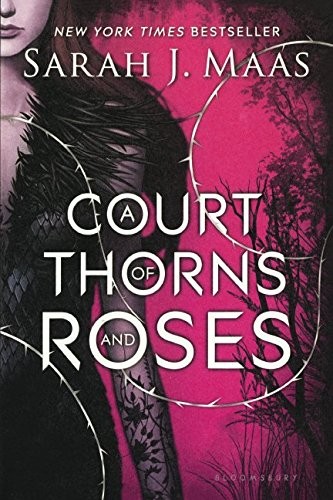
Feyre Archeron spends the first part of A Court of Thorns and Roses surviving — hunting, providing, keeping her family alive through sheer determination in a world that gives her nothing in return. Sarah J. Maas drops her into Prythian not as a chosen one but as someone who stumbles into something larger than herself and has to decide, repeatedly, whether she is going to keep going. The love story builds in the shadow of that decision, which is why it lands so hard when it finally arrives.
What Maas understood, and what distinguishes this series from a hundred others in the romantasy space, is that Feyre’s arc is fundamentally about earning her own regard — not just Rhysand’s. The relationship is a mirror for the larger question the book is asking: what do you become when you stop surviving and start choosing? That question is why readers have returned to this series in a way they have not with shinier, more action-heavy competitors. The feelings underneath the faerie politics are achingly recognizable.
Worth noting for readers approaching this series for the first time: the first book operates differently from the second and third, both in tone and in which relationship is at the center. Many readers find that the series opens fully in A Court of Mist and Fury, and approach the first book accordingly — as the necessary foundation. That is not a flaw in the entry point; it is a deliberate structural choice, and it pays off substantially for readers who stay with it.
This series is one of the rare cases where the audio experience adds something the page cannot fully contain. The voices of Prythian settle into the mind differently when they are spoken, and the pacing of the longer emotional sequences lands with more weight when heard rather than read.
If the specific quality of the dynamic here — the enemy who turns out to be the only one telling you the truth — is what hooked you, that same current runs through Jennifer L. Armentrout’s From Blood and Ash, which builds a similarly dangerous slow-burning tension between a heroine and the one man she should not want. For readers who love the fated-mates intensity but prefer paranormal romance, Kresley Cole’s A Hunger Like No Other offers that same ferocious pull with a different kind of world built around it.
There are books that tell a love story, and there are books that use a love story to tell you something about yourself. ACOTAR belongs to the second category, which is why the fandom never fully quieted down, and why readers return to the Night Court years after finishing the series. Some feelings are worth revisiting.
The ACOTAR series has generated one of the most devoted reader communities in contemporary fantasy romance, and that devotion is worth understanding. It is not simply enthusiasm for a well-executed love story — it is the response of readers who found in Feyre’s arc something that mirrored their own experience of moving from survival mode to something larger. That is a specific and not-always-available emotional frequency, and when a book hits it for a reader, it tends to stay. The series stays for a lot of readers, for exactly that reason.
Maas’s world-building in the ACOTAR universe is also one of its underappreciated strengths. The faerie courts have internal logic — political tensions, mythological rules, the specific ways that power operates between species and between individuals — that give the romance a framework beyond the interpersonal. The love story is richer for existing in a world with real stakes and real consequences that go beyond whether two people end up together. That combination of romantic and world-building ambition is what separates the series from lighter entries in the romantasy space.
One practical note: the ACOTAR series is currently five books long with additional novellas, and the emotional arc is designed to run across the full series. Readers who stop after the first book will have a complete enough experience, but will miss the full scope of what Maas is building. The second book in particular is considered by many readers to be where the series truly becomes itself. Going in knowing that is useful.