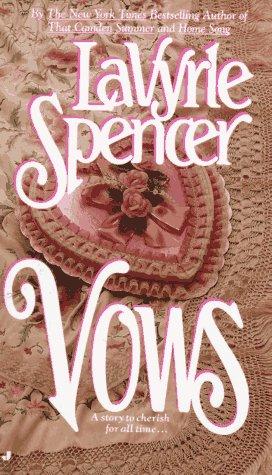
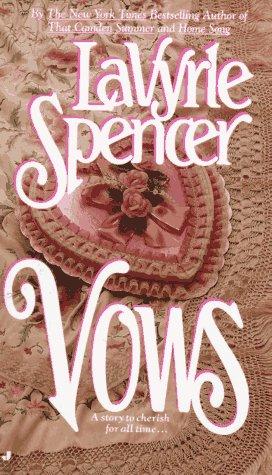
A promise made long ago carries a strange power — the way it waits for you in a drawer or a memory or the back of a thought you thought you had dealt with. The specific weight of a vow from another version of yourself, made in circumstances that no longer exist, to someone who has become someone different. And the question of whether that promise still holds, or whether the people you both became in the intervening years have the right to renegotiate it. LaVyrle Spencer built Vows on that question, and she took it seriously.
Emily and Tom made a deal when they were young — the kind that young people make with the confidence of those who have not yet encountered the full complexity of what they are promising. Years later, she shows up to collect. He has built an entire adult life on the assumption she never would. Spencer grounds their reunion in a small Wyoming town that feels genuinely lived in — the kind of place where everyone knows the deal, knows the history, knows both of their families — which means there is no private version of this collision. It is public and complicated and carries the weight of everything they were to each other before they became who they are now.
Spencer wrote Americana romance with a warmth that felt like memory rather than recreation — her small towns feel like places you have been, or places you grew up hearing about. The historical setting (late nineteenth century) adds a specific texture to the reunion: these are people with fewer options, less mobility, more at stake in a single community’s opinion, which makes the emotional reckoning feel heavier and more consequential. What they decide is not just personal. It is public, in a world that keeps things public. Spencer never lets you forget that.
The question of whether the original promise was binding is more interesting than it first appears. Emily and Tom were children when they made it, with children’s understanding of what they were committing to. The adults they became would not have made the same deal under the same terms. And yet the promise exists — witnessed, remembered, weight-bearing — and neither of them can pretend it does not. Spencer builds the reunion around this tension between what was promised and what is true now, and she does not resolve it quickly or cleanly.
Spencer’s grounded, unhurried prose is deeply suited to audio — this is a Sunday afternoon listen, the kind you settle into with time enough to let it move at its own pace. She does not rush the reckoning, and the audio format honors that unhurriedness in a way that quickly-turned pages sometimes do not allow.
Spencer’s other titles carry the same Americana warmth and the same respect for the complexity of adult love — for people with histories, who made mistakes, who are trying to do right by competing obligations. Morning Glory is frequently cited as her most emotionally complete novel — a love story built around a woman the town has already judged, and a man who needs a fresh start, each providing the other with what neither expected. Bittersweet explores similar second-chance territory with its own version of the question this book asks: whether who you were to each other, before everything that happened after, can survive what came between you.
They had both changed everything. They had become entirely different people from the ones who made the deal. The one thing that had not changed turned out to be the most important thing of all. Vows earns that discovery slowly and with real feeling, and it stays with you the way that only certain books do.
A note on Spencer’s place in American romance more broadly: she is among the writers who demonstrated that romance fiction could be set in the specific geography and history of the American Midwest and West without either romanticizing or condescending to that world. Her small towns are functional communities with real economies, real social pressures, real consequences for the choices her characters make. That groundedness is part of what has made her work last — it is rooted in something recognizable and real, which is a different kind of durability than the exotic or the aspirational.