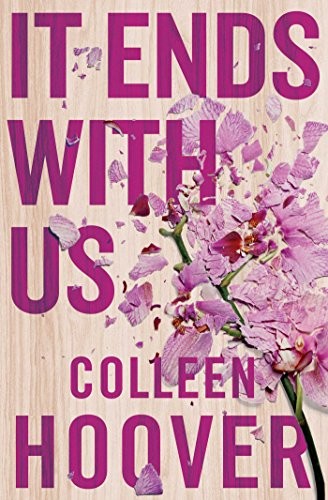
Some books do not comfort you. They sit next to you in the hard place and refuse to offer easy exits. It Ends With Us by Colleen Hoover is that kind of book — not because it is cruel, but because it is honest about something most love stories quietly agree never to address: the way harm and tenderness can live in the same breath, and the courage it takes to recognize the difference.
Lily falls for someone who seems to be everything — charming, attentive, a man who notices her in a room full of people. The early chapters feel like the right kind of story. And then, incrementally, something shifts. Hoover maps that shift with terrible precision. The male lead in this book is not a villain in any clean sense; he is a man with his own wounds, his own history, his own version of events that he believes completely. That complexity is not an accident. It is the entire point.
This book works because it refuses the comfort of a straightforward monster. It asks you to understand while still being clear about what understanding cannot excuse. Lily’s central realization — that she is living a version of the story she swore she never would — arrives slowly and then all at once. Hoover does not flinch from the weight of what Lily has to choose, or from the fact that leaving someone you love is its own kind of grief. Readers return to this book because it reflects something true: the hardest choices are the ones that cost you something you genuinely treasured.
The structure of the novel does something quietly brilliant. The early chapters include Lily’s journal entries from her teenage years, and Hoover plants details there that only become fully legible later — things you will read differently on a reread, knowing what you know by the end. The boy she wrote about in those journals, Atlas, is not absent from the present-day story. His reappearance complicates everything in ways the reader feels before Lily is willing to name them. Hoover understands that the most devastating emotional truths tend to arrive sideways, and she engineers accordingly.
The audio performance of this book’s final act is almost hard to listen to — in the way that means it is working completely. You hear Lily holding herself together while everything around her falls apart. That performance stays with you past the last chapter in a way the page alone cannot quite replicate. If you read this book initially in print, the audio version is worth a second pass.
Hoover’s back catalog rewards exploration if you want to stay in her register. November 9 deals with a love story built on a secret that changes the meaning of everything that came before it — and it earns its complexity in similar ways, by refusing to let anyone off the hook. All Your Perfects examines a marriage from the inside, after the romantic beginning has given way to something harder and more honest; it is quieter and more painful than most of her work, and it is completely worth it. Ugly Love operates on the far end of that same emotional spectrum — a no-strings arrangement that neither party can keep no-strings — and is one of her most emotionally efficient books. All of them share the quality of treating real-world emotional difficulty as the subject, not the obstacle.
One note worth adding: this book generates unusually strong reactions, and those reactions are part of its value. Reader communities have spent years debating it — not about whether it is good, but about what it means, what it demands, whether the ending is brave or devastating or both. That kind of lasting conversation does not happen around books that play it safe. If you want a book that will still be turning over in your mind a week later, this is the one.
The strength it takes to choose yourself when it means letting go of someone you love is not a small thing. This book understands that. It does not minimize the loss or inflate the courage into something cinematic. It just tells the truth about what it costs — and argues, quietly, that you were worth it anyway. That is why people keep coming back to it. That is why it stays.