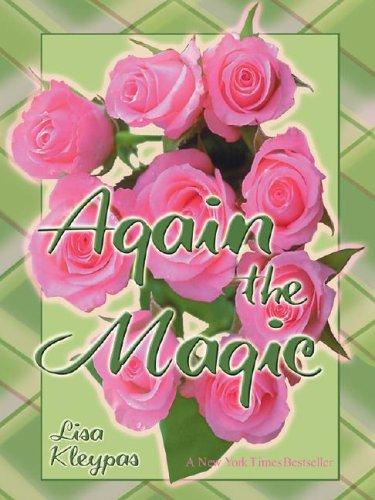
Believing in someone the rest of the world has already written off — not naively, not without full knowledge of the evidence against them, but with the specific conviction that the verdict does not account for everything — is a kind of love that costs something from the start. You are not just choosing the person. You are choosing to stand somewhere the consensus has vacated. And that position is lonelier than most romances are willing to acknowledge. Lisa Kleypas acknowledged it completely in Again the Magic.
Aline and McKenna have a love story interrupted by class difference and time, and then resumed years later with all of that distance between them. McKenna left as a servant’s son who could not stay. He returns with money and success and the hard-won ability to exist in spaces that once excluded him — and with everything he spent the intervening years trying to extinguish, which turned out to be unkillable. Aline has carried her own version of the interruption. Their reunion is not a fresh start; it is a negotiation between who they were, who they became, and what the years of separation made possible and impossible.
Kleypas writes longing with surgical precision, and Again the Magic is one of her best examples of it. The ache in this book is specific rather than general — the details of what McKenna and Aline lost, and the specific ways those losses shaped them, give the reunion its particular weight. This is not a story about two people who were kept apart by circumstances and then reunited by plot. It is a story about what separation does to people, and whether what survives it is the same thing that went in. Kleypas’s answer is careful, and honest, and more complicated than the typical second-chance resolution.
The class element in this book is handled with more seriousness than the genre typically manages. McKenna’s position as a servant’s son was not simply an obstacle — it defined his relationship to the world he grew up in, shaped the limits of what he was allowed to want, and determined what it cost him to want it anyway. The wealth and success he returns with do not erase that history; they reframe it. Kleypas is interested in who McKenna became in response to what he was denied, not just in the happiness he eventually achieves.
The restraint in Kleypas’s emotional scenes — the buildup, the approach, the things withheld until the moment they cannot be withheld — is almost more effective in audio than the scenes themselves. A skilled narrator makes the anticipation feel present in a way that rewards the patience the book asks for.
This book functions as a prequel to the Wallflowers series, and readers who come to it from that series will find the context deepens considerably. Readers who come to it fresh will find it an excellent introduction to Kleypas’s approach to the second-chance and redemption arc, with the full weight of her craft behind it. Devil in Winter is the other essential entry point in her historical catalog, and the two books together give a reader a clear picture of what she does best: heroes who carry their damage visibly, and heroines who see past it to something worth believing in.
He came back with nothing — no claim on her, no right to ask for anything, no assurance that what he felt had survived intact. She was the only thing he had ever wanted anyway. And she had never quite finished believing in him, even when every reasonable piece of evidence suggested she should have. Again the Magic is the story of what that kind of faith earns. It earns exactly what it should, and Kleypas makes you feel the full weight of the earning.
One more note on the Wallflowers series context: Again the Magic takes place approximately ten years before the main series and introduces Aline’s younger sister, who appears as a significant character in Secrets of a Summer Night. Reading Again the Magic before the Wallflowers series adds a layer of melancholy context to the sister’s story there — you understand what she has already witnessed, what it cost the family, and why certain things matter to her the way they do. Reading it after adds a different layer: the prequel becomes a deeper understanding of the world you already know. Both reading orders work, and both are worth doing.