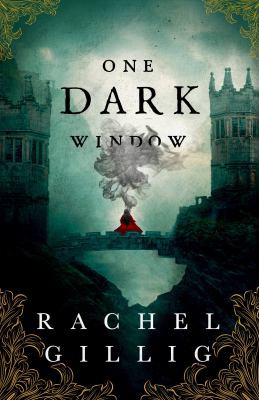
Every so often a fantasy romance comes along that uses its supernatural premise to do something emotionally precise — not just to create stakes or a cool magic system, but to externalize something true about what it feels like to be a specific kind of person. Rachel Gillig’s One Dark Window is that book. The monster inside Elspeth Spindle is not a metaphor the novel explains. It is simply a presence that has been with her since she was a child, that keeps her alive, and that wants things she is not entirely sure she should want.
The premise is a gothic fairy tale: Elspeth joins a group called the Physicians, led by the brooding and morally complicated Ravyn Yew, in an attempt to collect a set of magical cards that can break a curse afflicting their kingdom. The quest plot is well-constructed and keeps moving. But the real engine of this book is Elspeth’s interiority — specifically, her relationship with the Nightmare, the entity she shares her mind with, and what that dual consciousness means for everything she tries to feel and everything she tries to hide.
Gillig is particularly good at the internal negotiation that Elspeth is constantly running: what she wants versus what she’s allowed to want, what she shows the people around her versus what the Nightmare sees without being asked. It makes the romantic development with Ravyn more layered than a standard enemies-to-lovers arc because the obstacle isn’t just mistrust or circumstance — it is the question of whether Elspeth can be fully known by someone and still be chosen. That question is universal even in its fantastical packaging.
The atmosphere is where Gillig really distinguishes herself. This is gothic in the truest sense — fog, decay, old houses with histories, magic that has the texture of something ancient and half-understood. It is the kind of book that rewards reading in a single sitting, late enough that the darkness outside feels continuous with the darkness on the page. Readers who found themselves pulled into the oppressive atmosphere of Shatter Me will recognize a similar intimacy of interiority here, though Gillig’s world is colder and stranger.
The audiobook production gives the gothic atmosphere room to breathe — there is a quality to the narration that makes the Nightmare’s presence feel genuinely distinct from Elspeth’s voice, which is a harder thing to achieve than it sounds and makes the listening experience richer than the page version in specific ways.
For readers who found the appeal of A Court of Thorns and Roses largely in its darker, more morally ambiguous passages, One Dark Window offers a heroine who never fully escapes the ambiguity. Elspeth is not a girl waiting to be saved; she is a girl trying to figure out whether the thing that has been saving her all along is something she should trust. That distinction matters.
What this book understands about its readers is that the fantasy isn’t really about magic — it is about the experience of carrying something inside you that you haven’t shown anyone, and wondering what happens to the connection you’re building if you do. Gillig found a premise that makes that feeling visible. That is the real trick.