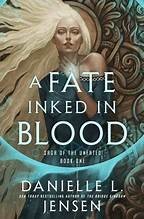
Norse-inspired romantasy had a moment in 2024, and A Fate Inked in Blood by Danielle L. Jensen is the reason why. It arrived with the particular confidence of a book that knows exactly what it wants to be — propulsive, atmospheric, and romantically devastating in the specific way that only a fated mates plot executed with genuine craft can be.
Freya is a shield maiden who has spent her life making herself useful enough to survive in a world that has very limited uses for women. She has a secret: a drop of divine blood that gives her the power to fuel runic magic, power that the right person in the right political moment could use to reshape the fragile alliances holding their world together. Bjorn is the Jarl’s son and champion, a man whose reputation precedes him in ways that make him sound like a story rather than a person. The prophecy that binds them is the kind of plot device that sounds convenient in summary and feels genuinely consequential in execution, because Jensen is too good a writer to let fate do the emotional work that her characters need to do themselves.
What distinguishes this from the broader field of romantasy is the specificity of the political world Jensen has built. The Norse-inspired setting is not decorative — it shapes the power dynamics, the honor codes, and the specific ways that Freya’s gift is both valuable and dangerous. Her position in this world is always precarious in ways that feel historically grounded rather than fantasy-convenient, which makes the romance a real negotiation rather than an inevitable arrival. Bjorn could choose to use her. He keeps choosing not to. That choice, made repeatedly in the face of pressure to do otherwise, is where the real attraction lives.
Readers who found themselves gripped by the political maneuvering woven through Fourth Wing will find Jensen building similar tension around competing loyalties and hidden agendas, with the added layer of a magic system that requires Freya’s specific blood — which means she is never fully safe even with people who want her to be. The slow burn here is patient and earned, and the payoff understands exactly what it is paying off.
This is also one of the best uses of the fated mates trope in recent memory, specifically because Jensen interrogates it rather than accepting it. Freya’s conflict with the prophecy isn’t just about danger — it’s about agency. She wants to choose, and she resents being chosen by the universe before she could decide for herself. That distinction is what makes her compelling and what gives the romance its particular emotional texture.
The audiobook benefits enormously from the production quality — the Norse names and the ritual quality of the world’s magic system have a cadence that the narration handles beautifully, and the intimate close-third-person perspective translates well to listening. If you’ve been building your romantasy library after A Court of Thorns and Roses, this one belongs on the shelf.
There is something worth naming about why this subgenre keeps producing books that readers devour in a single sitting: the best Norse-inspired romantasy understands that its readers want more than a love story. They want a world where the heroine’s strength is the point, not just a trait. Jensen gives that in full measure.