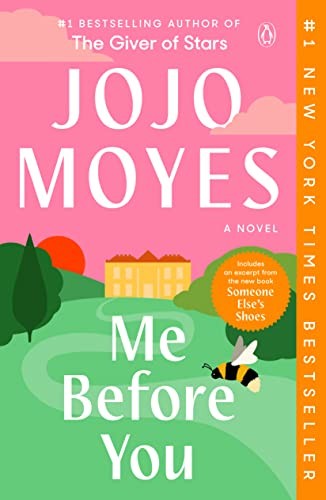
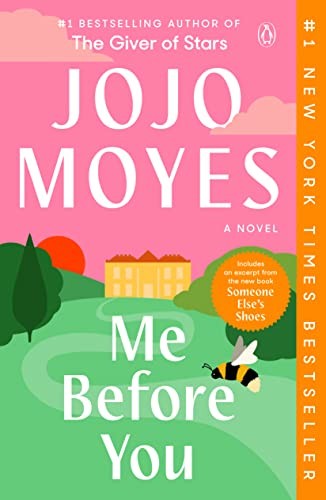
The particular intimacy of caring for someone who does not want to be cared for — who resists every kindness because accepting it means accepting a reality they have not yet made peace with — is a quiet and difficult thing. And the stubborn, patient love of staying anyway, not because you can fix it, but because you see them and cannot walk away from what you see. That is where Me Before You begins, and that is the register in which Jojo Moyes never flinches.
Will Traynor is not an easy character to love at first. He is sharp and dismissive and he means to be. Louisa Clark is not what anyone would have designed for this situation — disorganized, unconventional, genuinely cheerful in the face of his deliberate frost. Moyes builds their relationship on small moments and honest conversation rather than grand gestures. She does not rush it. By the time the weight of the ending arrives, it carries the full force of everything she has been quietly building — every exchange, every small breakthrough, every moment where something real passed between them despite his best efforts to prevent it.
This book asks what love requires of us — not just warmth and feeling but real witness, real sacrifice, real respect for another person’s autonomy even when that autonomy leads somewhere that breaks you. Moyes does not flinch from that question, and she does not resolve it cleanly. Readers return to this one not because it is comforting but because it is true in a way that few romances are willing to be. It takes the concept of a happy ending and asks: whose happiness, and on whose terms? Those are not comfortable questions, and the book does not pretend they are.
What Moyes gets right about Will that lesser books about disability often miss: he is not a symbol. He is a specific man, with specific tastes, a specific history, a specific kind of humor, specific regrets. His situation is the context, not the character. Louisa connects with him — and the reader connects with him — because of who he is, not what happened to him. That distinction sounds simple and is genuinely difficult to execute, and Moyes executes it completely.
The audio performance captures Will’s dry wit and Louisa’s warmth from the first chapter, and the emotional build hits differently when you are inside it rather than turning pages toward an ending you can feel coming. The devastation of the final act is fully earned, and the narration carries every degree of it without overselling. This is one of those books where the audio version is the definitive experience.
Moyes’s other work rewards exploration for readers who want to stay in her register. The One Plus One offers a gentler emotional landscape with some of the same warmth and class-consciousness that makes her heroines feel real. Still Me and After You continue Louisa’s story past this book, though they operate in a somewhat different key — lighter in some ways, still emotionally honest in the ways that matter. For readers who want something outside her catalog that asks similarly uncomfortable questions about love and obligation, The Light We Lost by Jill Santopolo sits in very similar territory and delivers the same kind of earned devastation.
Some love stories do not end the way you want them to. They end the way they have to. And Moyes argues — quietly, devastatingly — that a love given fully, witnessed completely, honored in every choice that follows, is not a lesser love for where it lands. It may be the truest kind. That argument, made without sentimentality and without false comfort, is what readers carry with them long after the last page.
A note for readers who have not yet encountered Moyes’s work: she writes with a social awareness that gives her contemporary novels a texture rare in the genre. Class, employment, family obligation — these are not backdrop in her books, they are structural. Louisa’s world before Will is specific and economically real, and that specificity is part of what makes her relationship with him so charged. They are not just two people from different emotional positions — they are two people from entirely different circumstances, and Moyes never lets either of them forget what that means.