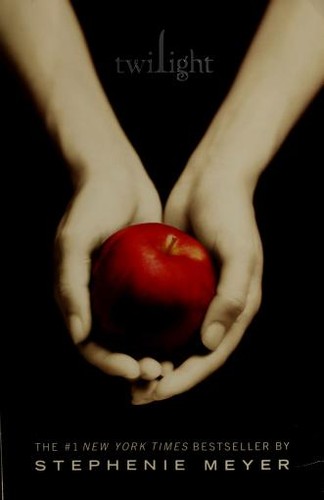
A feeling belongs specifically to first love — not love in general, but first love, the version that does not know yet what it is supposed to be cautious about. Everything gets big and strange and the ordinary world recedes. School and weather and the logistics of daily life keep happening around you, but none of it seems quite as real as the person who makes your chest feel different. That feeling is almost impossible to reproduce in fiction for adults, because it requires the complete suspension of the defenses adulthood builds. Stephenie Meyer built a world where that suspension was possible, and millions of readers stepped into it.
Bella Swan moves to Forks, Washington and notices Edward Cullen on her first day, in the particular way you notice when something is both inexplicably beautiful and inexplicably wrong. Meyer does not rush the reveal. She lets the wrongness sit, lets the noticing accumulate, lets the tension of being watched by someone who simultaneously cannot stand you and cannot look away build into something that feels inevitable by the time it arrives. The love story in Twilight is not subtle. It is consuming, and it is entirely intentional.
What Meyer understood is that the vampire mythology was doing emotional work, not narrative work. The reason Edward cannot be with Bella is not procedural — it is the most extreme possible version of the thing that stands between a lot of people and the love they want: I will hurt you if I let myself have this. The supernatural scale of that fear is what let readers feel it so completely. It was not metaphor for them. It was just true.
The cultural moment around this series is worth acknowledging separately from the books themselves. Twilight arrived in 2005 and created a reader community that was, at the time, unlike anything the YA and romance categories had seen — devotional, public, enormously generative of secondary creative work. That community’s energy is part of what made the books a phenomenon rather than simply a success. The books themselves, independent of the phenomenon, are a very specific emotional experience that either works for a reader or does not, and the phenomenon should not be mistaken for the experience. Both are real. They are not the same thing.
The Twilight series was one of the early audiobooks that built a devoted listening audience in young adult and crossover romance — and for readers returning to it now, the audio format offers a particular kind of nostalgia that the page version does not quite replicate.
The feeling of all-consuming first love that reorders the world around one person also runs through Tahereh Mafi’s Shatter Me, which builds a similar intensity in a dystopian setting where the stakes of being close to someone are equally impossible. For readers who love the forbidden-love structure in a paranormal world but want something more adult in its emotional register, Kresley Cole’s A Hunger Like No Other gives the fated-but-forbidden tension a ferocious urgency that is harder to put down.
Twilight is not a book that asks to be defended. It simply is what it is — a love story about the specific, overwhelming feeling of being completely seen by someone for the first time, in a world where that seeing might destroy everything. Some readers found it in their teens and it never fully let go. Some find it now and understand, for the first time, what all the noise was about.
Meyer’s pacing in the first book is worth defending specifically: the slow accumulation of Bella’s awareness, the way the wrongness of Edward registers before the beauty does, the months of school-hallway tension before anything is stated — this is deliberate, not tentative. It mirrors how first love actually feels: the long period of observation before admission, the noticing that precedes acknowledgment by weeks. Readers who are impatient with this pacing are being asked to remember what it felt like before caution made speed a virtue. That is the book’s actual ask.
For readers who encountered Twilight as teenagers and are considering returning to it as adults: the experience is different, and that difference is worth knowing about in advance. The emotional immersion that made it consuming at sixteen is harder to achieve at thirty-five, because the defenses are thicker and the suspension of disbelief requires more work. Some readers find that the work reveals something they missed the first time — the deliberateness of the pacing, the mythological architecture, the specific quality of Meyer’s prose. Others find they love the memory of the book more than the reread. Both are legitimate responses. The book was always about the feeling, and feelings are not static.