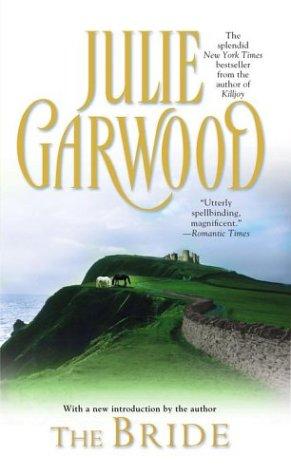
Arranged marriages in historical romance carry a particular emotional logic: two strangers placed in proximity by circumstances neither of them chose, with no framework except obligation, discovering that something entirely other than obligation is what they are actually building. The best version of this story is not about learning to tolerate someone. It is about the moment you realize that what you thought was tolerance has been, for some time, something else entirely. Julie Garwood wrote that moment with the warmth and precision that made her one of the defining voices in Highland romance.
Jamie is delivered into the keeping of Alec Kincaid, a Scottish laird who did not ask for a wife and is not entirely sure what to do with one, particularly one who arrives full of opinions and an absolute refusal to be made small. Garwood builds The Bride around the slow, entirely unintentional process of two people who set out to coexist and end up building something that surprises them both. Alec’s tenderness is discovered rather than declared — it emerges in small moments before either of them has named what is happening, which is exactly how it feels when it finally lands.
Garwood’s particular gift is warmth. The Highland setting could be brutal, and it is, but the emotional register of the book is generous — to both the hero and the heroine, and to the reader. Jamie is funny and fierce and entirely herself in a situation that could have made her small, and Alec’s respect for that, arriving before his feelings do, is the structural move that makes everything else work. He stops managing her before he starts loving her. For Highland romance specifically, that sequence matters, and Garwood understood why.
Jamie’s Englishness in a Scottish world is one of the book’s quietly smart structural choices. She is genuinely foreign to the world she has been placed in — its customs, its language, its social dynamics are all new to her — which means she has no inherited framework for how to behave and therefore behaves entirely like herself. That foreignness is what allows her to see Alec clearly, because she is not reading him through the lens of what she has been told to expect. Her fresh perspective is the thing that gets through his defenses, and Garwood makes that feel inevitable rather than convenient.
The warmth and humor in Garwood’s voice translate exceptionally well to audio. This is a book that sounds like it was meant to be told aloud, and the emotional beats land with the same generosity in narration as they do on the page.
For readers who love the arranged-marriage structure with that same slow emotional reveal, Mary Balogh’s The Doubtful Marriage handles a similar framework with a quieter, more restrained English sensibility that makes the eventual warmth hit differently. The cross-border, fish-out-of-water tension here — an English woman in a Scottish world that does not know what to make of her — also echoes in Diana Gabaldon’s Outlander, which scales the same displacement to an entire different century.
The Bride has been beloved for decades because it understands that the best love stories are not about falling — they are about the slower, stranger process of arriving somewhere you did not expect to find yourself, with a person you did not expect to find there, and realizing that both of you are staying.
Garwood’s Highland romance series — The Bride, The Gift, The Prize, and others — rewards reading across the full set. She returns repeatedly to the cross-cultural dynamic, the marriage-of-circumstance-that-becomes-real structure, and the warm, comedic-but-genuinely-felt emotional register that distinguishes her work from Highland romances with similar premises. The heroines in particular accumulate as a type worth tracking — fierce, funny, unapologetically themselves in worlds that do not know what to make of them. Starting with Jamie is the right choice. She is the template.
A note on the specific pleasure of the Highland romance subgenre for readers who have not explored it: the setting does something to the emotional stakes that other historical periods cannot quite replicate. The clan structure, the landscape, the specific relationship between land and identity in that world — all of it creates a kind of love story where what is at stake is not just the relationship but the world the relationship has to live inside. Garwood understood that, and used it. Her books feel bigger than they are, in the best sense, because the setting earns that scale.